For one on/off lighting circuit controlled from one wall position, the Tapo S210 is the clearest starting point among these four switches when there is no neutral at the switch. Choose the two-gang S220 for two separate one-way circuits, Lightwave LP24MK2 for four compatible dimmable circuits, or the Meross Matter relay if you want to keep a suitable existing faceplate and have a neutral connection.
Check the circuit before the ecosystem: gang count, one-way or two-way wiring, neutral availability, back-box space and lamp type determine whether a product fits. These are mains devices, not universal drop-in upgrades. If the circuit is uncertain, ask a qualified electrician to assess it.
Our four quick picks

One one-way circuit — Tapo S210
No-neutral on/off wall control; a Tapo H100 or H200 hub is needed for smart features.

Two one-way circuits — Tapo S220
Two no-neutral on/off controls in one plate; requires a compatible Tapo hub.

Four dimmable circuits — Lightwave LP24MK2
A four-gang dimmer; check lamp, driver and load compatibility and allow for Link Plus.

Keep the faceplate — Meross Matter relay
A hidden relay for a suitable existing switch; check neutral and enclosure space.
In This Article
- Four quick picks
- Comparison table
- Four reviews
- Head-to-head decision
- How to choose
- UK wiring and back boxes
- One-way, two-way and dimming
- Installation and everyday use
- How we chose
- Final verdict
- Frequently asked questions
Smart Light Switches at a Glance
| Product | Our award | Wiring format | Hub | Best for |
|---|---|---|---|---|
| Tapo S210 | One-way no-neutral | 1 gang, 1 way; no neutral | Tapo H100 or H200 | Simple single-circuit control |
| Tapo S220 | Two-gang no-neutral | 2 gang, 1 way; no neutral | Tapo H100 or H200 | Two nearby lighting circuits |
| Lightwave LP24MK2 | Four-gang dimming | 4-gang smart dimmer | Lightwave Link Plus for smart features | Four dimmable circuits and HomeKit |
| Meross Matter Relay | Existing faceplate | Neutral and suitable enclosure required | Matter controller for chosen platform | Keeping an existing wall plate |
The table is a first-pass compatibility filter, not permission to install. “No neutral” solves one common constraint; it does not confirm back-box depth, switched-live arrangement, earthing, load type or suitability for an existing two-way circuit.
Four Smart Light Switches Reviewed
1. Tapo S210 — One-way no-neutral switch
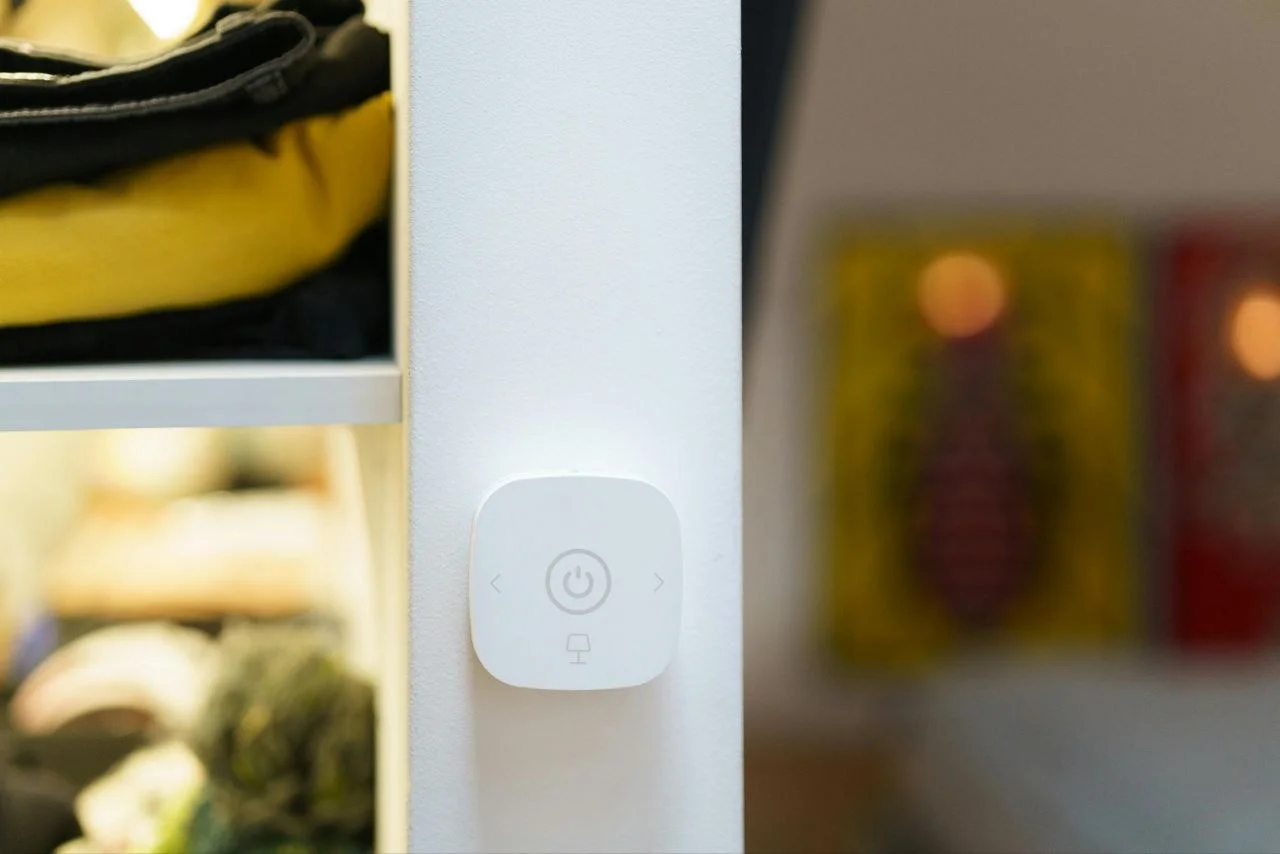
The Tapo S210 is our starting point for a simple one-way circuit without a neutral because it solves that wiring constraint without replacing the familiar wall-switch idea. It controls one lighting circuit, keeps physical switching at the wall and adds remote control, schedules, timers, Away mode and Alexa or Google Assistant through the Tapo app.
It needs a Tapo H100 or H200 hub for smart features, sold separately. That is an extra box, but the battery-powered design avoids relying on a neutral conductor at the switch. The replaceable batteries are accessible after installation, and the app reports low power.
This is a one-gang, one-way switch. It is not the answer for a landing circuit already controlled from two wired positions, and it is not a dimmer. Buy it where one wall position operates one ordinary on/off lighting circuit.
2. Tapo S220 — Two-gang no-neutral switch
The Tapo S220 applies the same no-neutral approach to two separate lighting circuits. It suits a kitchen, living room or hall where two gangs sit in one wall plate and both need ordinary on/off control. Each channel can be controlled through the Tapo app, schedules or supported voice assistants.
As with the S210, the hub requirement is real: allow for a Tapo H100 or H200. The switch is battery powered, so the fitting does not use a neutral conductor, but that does not make installation universal. The back box still needs enough depth, the connected loads must be compatible and the circuit arrangement must match one-way control.
Choose this over buying two single-gang products when both circuits terminate at one two-gang position. Skip it if either circuit is dimmed or controlled from another wired switch position.
3. Lightwave LP24MK2 — Four-gang dimmer
The Lightwave LP24MK2 is a specialist option for four compatible dimmable circuits. Unlike the on/off switches above, it is designed to vary light output, and energy monitoring helps expose what those connected circuits use. Its stainless-steel faceplate is a different finish from the plastic Tapo switches.
Smart app and voice control require the Lightwave Link Plus. With that bridge it works with Apple HomeKit, Alexa and Google Assistant. Lightwave says the dimmer can replace a standard UK switch without additional wiring, but lamp compatibility, minimum load and back-box depth still matter; poor LED and dimmer matching can cause flicker or unstable low-level dimming.
Consider it when four-gang dimming justifies the bridge and installation cost. For a single utility-room light, it is excessive. For non-dimmable lamps or drivers, it is the wrong control type.
4. Meross Matter Relay — Keep the faceplate
The Meross Matter relay is for keeping the wall plate you already like. It can sit behind a suitable mechanical switch or in an appropriate enclosure, adding app, voice and schedule control without replacing the visible front plate. Check the exact linked module dimensions and wiring diagram before purchase. It supports Matter and compatible smart-home platforms.
A hidden relay is flexible but less forgiving to install. This model needs a neutral conductor and enough spare volume behind the switch or in a suitable enclosure. Wires must not be crushed, terminals must remain secure and the connected load must stay within the manufacturer’s limits.
Choose it when its manual confirms compatibility with the existing switch and circuit. Skip it when the back box is shallow or crowded; fitting a deeper box or locating the module elsewhere is safer than forcing the assembly closed.
Head-to-head: which switch fits?
S210 or S220: both need no neutral, use batteries and need a Tapo hub for smart functions. The meaningful difference is circuit count: S210 operates one one-way circuit, while S220 operates two separate one-way circuits at the same wall position. Neither is a dimmer or a confirmed substitute for an existing wired two-way arrangement.
Lightwave or Meross: Lightwave is for four compatible dimmable circuits with a new front plate and Link Plus. The Meross Matter relay is for retaining a suitable front plate where a neutral and installation space are available. They solve different problems; do not choose between them on app compatibility alone.
How to Choose a Smart Light Switch
Start with the circuit, not the ecosystem
Write down four facts: the number of gangs, whether the circuit is one-way or two-way, whether a neutral is present and whether the connected lighting is dimmable. Those answers eliminate most unsuitable products. Only then compare Apple Home, Alexa, Google Home, Matter, Zigbee and manufacturer apps.
Choose a replacement switch or hidden relay
A complete switch gives you a known faceplate, controls and installation layout. A relay keeps the visible switch and can be better in a period property or coordinated room, but it consumes back-box space. If you mainly want colour scenes rather than reliable wall control, compare the trade-offs in our guide to Apple, Google and Amazon smart-home ecosystems.
Plan for household use
The light should still work when the internet is down, a phone is flat or a guest enters the room. These four choices retain a physical control route, which is why they make more sense for shared spaces than app-only workarounds. For automation ideas, see our smart-lighting scenes and schedules guide.
Check platform and hub requirements
Tapo and Lightwave need their stated hub or bridge for the smart functions described here. Meross avoids a separate brand hub, but needs a suitable network and a Matter controller for the chosen platform. Our Zigbee, Z-Wave and Wi-Fi comparison explains why hub-based devices can be the tidier option at scale.
UK Wiring, Neutral Wires and Back Boxes
Older UK switch drops often contain a permanent live and switched live but no neutral. That is why Tapo S210 and S220 are the no-neutral choices here. Never infer conductor function from colour alone, especially in altered or older wiring; safe isolation and testing are required.
Neutral-dependent products such as the Meross relay need a suitable neutral connection at the installation point. Do not borrow a neutral from another circuit or squeeze an extra connector into an already crowded enclosure. Electrical Safety First provides household electrical-safety guidance, while Approved Document P explains the building-regulations framework for electrical safety in dwellings.
Back-box depth is the next common failure. Smart electronics and terminals take more room than a slim mechanical switch. Measure the box, inspect cable entry and leave enough room for conductors to bend without strain. A deeper box or surface spacer is preferable to pinching insulation behind the plate.
- No neutral available: compare Tapo S210 and S220 by circuit count.
- Neutral and Matter wanted: the Meross relay is the hidden choice here; check the exact wiring and controller requirements.
- Dimming required: confirm lamps, drivers, circuit count and load range before choosing Lightwave.
One-Way, Two-Way and Dimming
One-way switching
One wall position controls the light. This is the simplest match for Tapo S210 or S220. “One gang” means one control; “one way” describes the circuit arrangement. The terms are related but not interchangeable.
Two-way switching
Two wall positions control the same light, common on stairs and in halls. Do not replace one end with a one-way smart switch and assume the other will behave. A wireless secondary control is a different design from replacing one end of an existing wired two-way circuit. Ask an electrician to identify the current topology before selecting a product.
Dimming
Dimming depends on the switch, lamp or driver and the load working together. Symptoms of a poor match include flicker, buzzing, lights that will not turn fully off and a narrow usable dimming range. Test the manufacturer’s compatibility guidance before buying several units.
If the goal is coloured or tunable-white light, a smart bulb may be the better device. Our smart lightstrip guide covers accent lighting, while a wall switch is better for ordinary fittings that should remain controllable by everyone.

Installation and Everyday Use
Mains wiring is not the place to learn by trial and error. Use a qualified electrician when the conductor arrangement is unclear, the circuit uses two-way or intermediate switching, the back box needs replacement, or the connected load falls outside the product’s stated range.
- Survey the circuit: record gang count, switching arrangement, neutral availability, back-box size and connected lamp type.
- Choose the exact topology: match one-way, two-way, dimming or relay control before considering finishes.
- Install safely: isolate, prove dead and terminate according to the manufacturer’s diagram; use an electrician where competence or circuit identity is uncertain.
- Set up the hub or platform: pair the switch, assign a clear room and circuit name, then install firmware updates.
- Test manual behaviour: confirm every household member can operate the light without an app.
- Test automations cautiously: add one schedule or scene at a time and verify recovery after broadband and power interruptions.
Secure the account with a unique password and multi-factor authentication where available. Review shared access when someone moves out or changes phone; our guide to securing a smart home covers the wider network and account checks.
How we chose
We compared the published wiring requirements, gang count, switching type, dimming role, hub requirements and form factor of the four exact products above. We have not installed these switches, tested lamp compatibility or measured connection reliability. Manufacturer instructions and an assessment of the actual circuit should settle installation suitability; a feature list cannot do that.
Which Smart Light Switch Should You Buy?
Buy the Tapo S210 for one simple, non-dimmable lighting circuit when no neutral is available. Its no-neutral design removes one common wiring constraint; the one-way circuit and hub requirement still have to fit. Choose the S220 when two one-way circuits share the same position.
Lightwave LP24MK2 is the four-gang dimming choice when the lamps and load suit it. With a neutral present, the Meross Matter relay can preserve a compatible existing faceplate. Neither substitutes for a product chosen for a different circuit topology.
The biggest mistake is buying by app compatibility and discovering that the physical circuit does not match. Wiring topology, neutral availability, back-box space and load compatibility come first.
Frequently Asked Questions
What is the best smart light switch in the UK? The Tapo S210 is the starting point among these four for a simple one-gang, one-way lighting circuit because it does not need a neutral wire and retains physical control. It requires a compatible Tapo hub for smart features.
Do UK smart light switches need a neutral wire? Some do and some do not. Tapo S210 and S220 do not need a neutral at the switch. The Meross relay needs a suitable neutral connection. Always check the exact model instructions and circuit.
Can I fit a smart switch to a two-way circuit? Only when the product and wiring design explicitly support that arrangement. A one-way smart switch is not a direct replacement for one end of every two-way circuit.
Can a smart switch dim LED lights? Only a compatible smart dimmer can do so, and the LED lamps or drivers must also be dimmable and within the supported load range.
Do smart light switches work if the internet is down? Physical switching should remain available, while remote app and voice functions may stop. Local hub or Matter behaviour varies by product and platform.
Should an electrician install a smart light switch? Use a qualified electrician if you cannot safely identify the circuit, prove it dead, confirm the conductor functions or match the product to the wiring and load.