
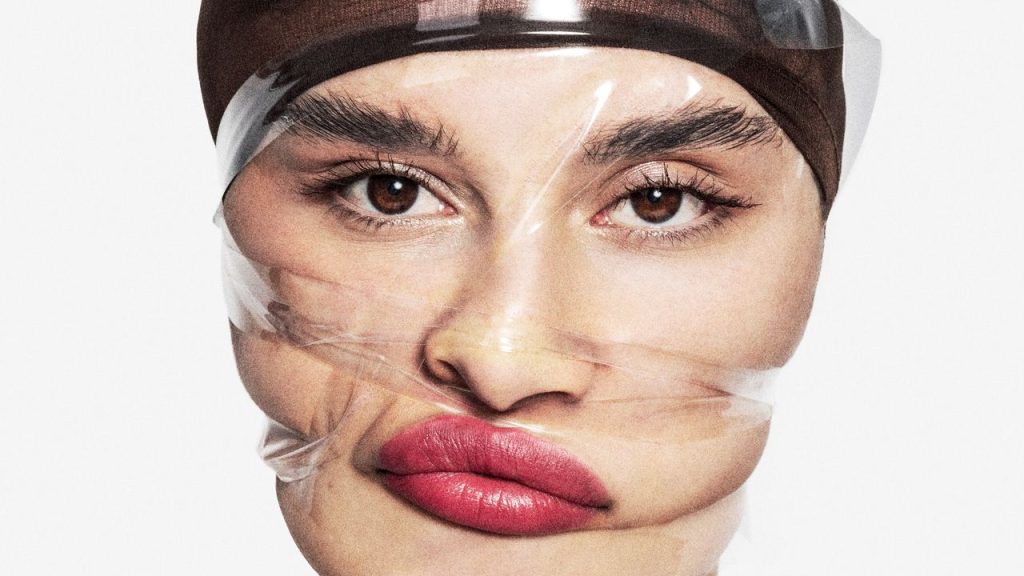
It’s hard to pinpoint exactly when we stopped—for the most part—treating beauty treatments like plastic surgery like a scarlet letter and adopted a more accepting stance. What was once seen as such a taboo (to the point that celebrities would rather lie and claim drinking olive oil daily or using a $600 cream as the sole reason for their skin looking 15 years younger) has gradually become something many are openly admitting to getting. People craved authenticity and honesty when it came to skin surgery procedures, and this year, that’s exactly what they got: 2025 was the year of plastic surgery transparency.
And the numbers back it up. According to Jenny Zeng, a beauty analyst at Spate, interest in facelifts has not only skyrocketed, but so has interest in non-surgical treatments and at-home solutions. Content around facelifts and facial symmetry, for example, has over 153k views on TikTok. Spate’s data also shows that other procedures have been increasing in popularity year-over-year (YoY): upper blepharoplasty has a little over 651k increase YoY, lower bleph has about 513k increase YoY, and septoplasty has about a 898k increase YoY. Compared to the declining interest in Botox and filler (Botox is down 3.3 YoY while facial filler services are down 13.1 YoY), plastic surgery dominated skin conversations in 2025.
“Aesthetics, in a way, feels less shame-based and more about agency,” says Catherine Chang, MD, FACS, board-certified plastic and reconstructive surgeon and founder of Prive Beverly Hills and NAKEDBEAUTY MD. “Plastic surgery is increasingly viewed as a tool alongside skincare, wellness, and therapy to help people feel more aligned with how they see themselves.”
An upper bleph before and after IG photodump. A 20-part TikTok series documenting the journey abroad to get a facelift. Live vlogging minutes after the anesthesia has worn off in the recovery room. Dr. Chang says social media has played a huge role in allowing people to see all the possibilities with plastic surgery. “When people see their friends, public figures, or influencers openly share their journeys, it helps normalize the idea that having work done doesn’t have to be taboo or drastic and can still look very natural.” Case in point: Kris Jenner called her recent procedure “aging, my way.”
Lesley Rabach, MD, board-certified plastic surgeon and cofounder of LM Medical NYC, agrees and says this type of openness on social media dates back to post-COVID lockdown, when people posted more of their lives online, especially when it comes to their skincare routine; she says there was less gatekeeping about what treatments they were getting done and that’s something that’s continued now. “We’re really in a world now where people are just living their lives and the stigma of cosmetic surgery has lessened,” she says.
This type of oversharing can also provide important learning lessons. Douglas M. Monasebian, MD, FACS, a double board-certified plastic surgeon at Park Avenue Plastic Surgery and a diplomat for the American Board of Plastic Surgery, says that people are posting the failures of surgery just as much as the successes, which he thinks is important for the public to see. Dr. Rabach adds that social media, AI, and ChatGPT provide a lot more information, and patients are more well-informed than ever before.
Celebrities Getting Real
Though many have debated the impending burst of the influencer bubble, experts say that celebrities and public figures still have influence in consumer decisions. Similar to how Hailey Bieber convinced the masses to have a Pucci summer, we may also be more open to aesthetic treatments if celebs were honest about how they keep their skin looking fresh and smooth. “It helps to alleviate the unrealistic standards, which can cause self-confidence issues in young women,” says Dr. Chang. “When public figures admit to having work done and acknowledge how aging gracefully can include professional help and plastic surgery, it does break the illusion; it helps make plastic surgery feel more human and more accessible.”
More Stories
Preppy Plaid, Tweed Texture, and More Will Dominate Nail Trends in 2026
How to Start the Year With Less Cortisol
The Blurry French Lip is Perfect for NYE Kisses and Beyond