




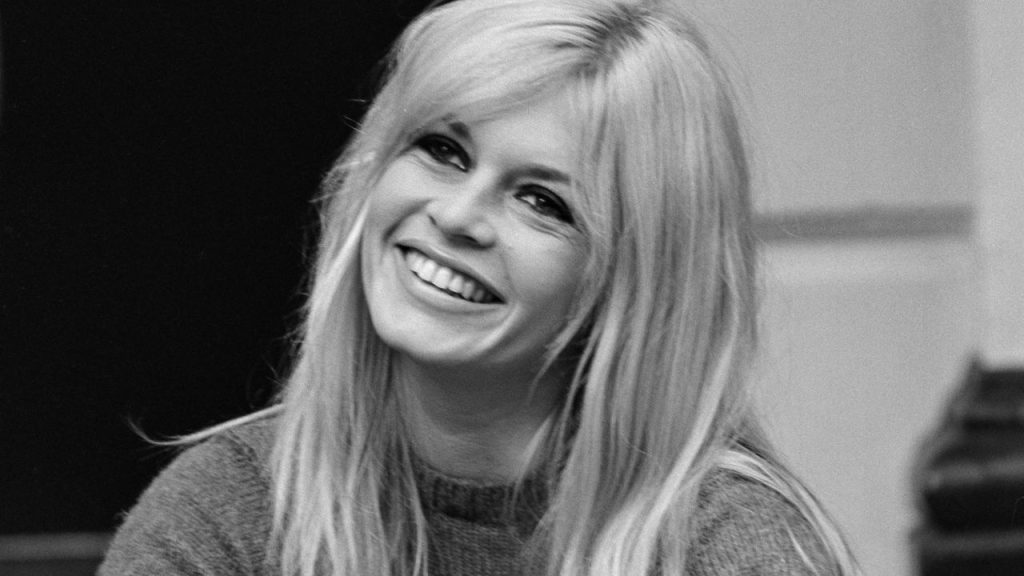
Opposing the slaughter of horses, the killing of baby seals in Canada, industrial farming, bullfighting and hunting, Bardot sold many of her possessions at auction to raise money for animals, including some of the jewellery given to her by her third husband, the German millionaire, Gunter Sachs, with whom she had a brief, three year marriage in 1966 (“I never get hung up on the past—the memories are too negative,” she explained to Vanity Fair). Their divorce was not acrimonious, and after Bardot sold her wedding ring, Sachs managed to track it down and give it back to his former wife. She was said to be distraught when he killed himself at the age of 78 at his chalet in Gstaad.
Bardot’s passion for animals was eccentric—in 2015, she pressed François Hollande to grant a “presidential pardon” to hundreds of wild Alpine mountain goats due to be culled because of an infection. But, considering her delicate mental health and the turbulence of her personal and professional lives, it was rooted in something more poignant. “Animals have never betrayed me,” she once explained. “They are an easy prey, as I have been throughout my career. So we feel the same. I love them.”
In 1958, Bardot moved to Saint-Tropez, and transformed the tranquil coastal region into the de rigueur destination for the jet set. Indeed, after she turned down Sachs’s first marriage proposal, he arranged for a helicopter to shower hundreds of red roses over her house, La Madrague. “It’s not every day a man drops a ton of roses in your backyard,” she wrote in Initiales BB.
Bardot lived at La Madrague with her fourth and final husband, Bernard d’Ormale, a former adviser to the Front National, whom she married in 1992. The duo seemed to share political inclinations. In a 2014 interview with Paris Match, Bardot described the far-right leader Marine Le Pen as “the Joan of Arc of the 21st century,” and later urged voters not to back Emmanuel Macron in the French elections, saying his lack of empathy for animals could be seen in “the coldness of his steel eyes.”
In 2008, Bardot was convicted of inciting racial hatred for the fifth time, after sending a letter to Nicolas Sarkozy, then Interior Minister for France, stating her objections to the Muslim festival Eid al-Adha, which traditionally involves the slaughter of sheep. “I am fed up with being under the thumb of this population which is destroying us, destroying our country and imposing its acts,” she wrote in a letter later published by her foundation. Fining her €15,000, the prosecutor said she was tired of charging Bardot with such crimes.
Two years later, Bardot lashed out at director Kyle Newman, who was planning to make a Bardot biopic, presumably inspired by the twining of fantasy and reality that defines her story, and the chasm between the public image of Bardot and her reality: someone bold, flawed, and tenacious. “Wait until I’m dead before you make a movie about my life,” she warned, otherwise “sparks will fly.”




More Stories
The Big Benefits of Small Talk
39 Thoughts I Had While Watching the Season 1 Finale of Heated Rivalry
What Sadie Sink Hopes Fans Will Remember Most About Max Mayfield